7 Signs Your Home Needs Soft Washing in Houston
Green film, black streaks, and musty stains on your home's exterior usually mean algae, mildew, and mold have taken hold, and those growths are best removed with soft washing, not high-pressure water.
Published
Part of our Soft Washing service.
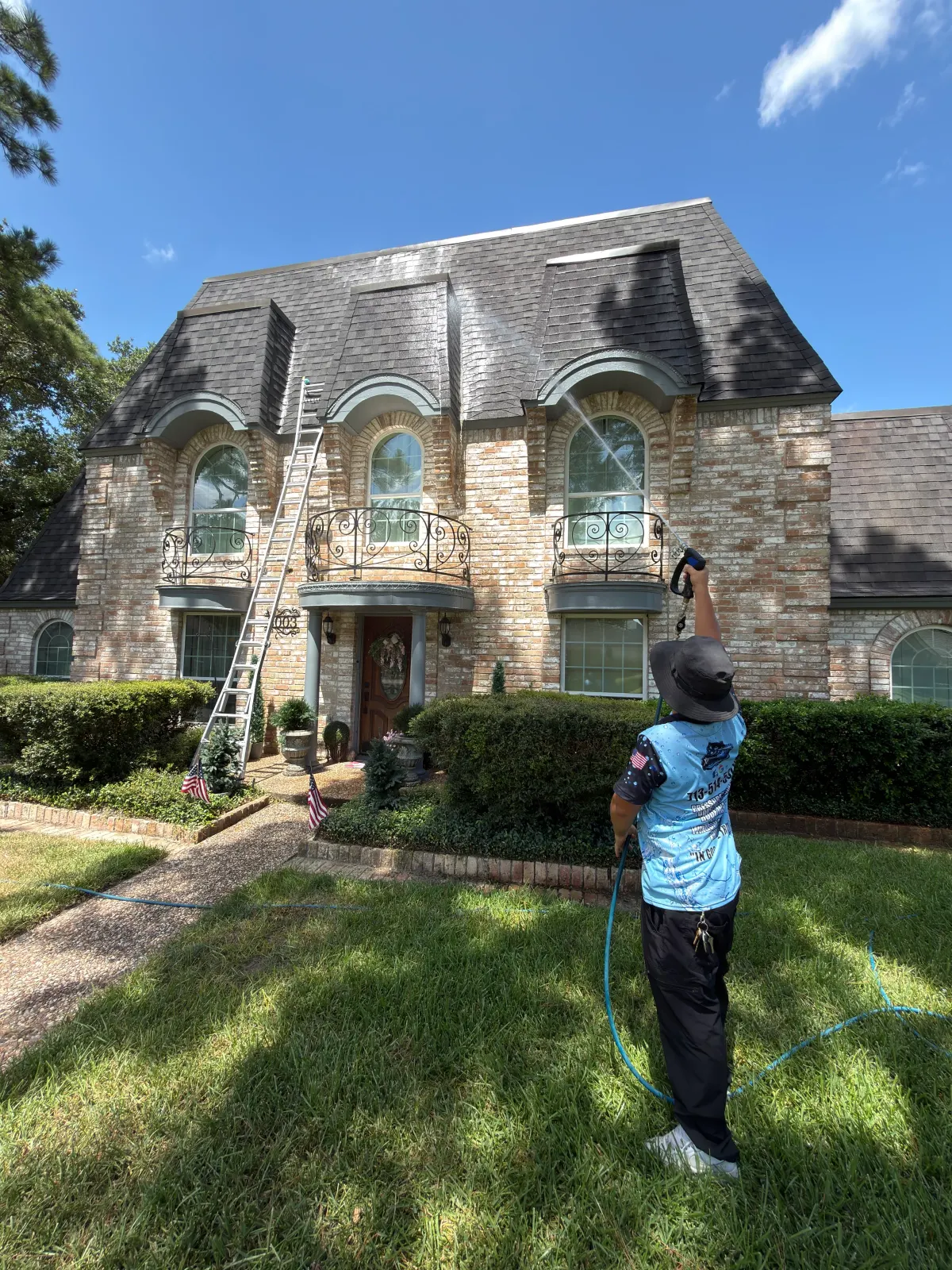
What the problem looks like and why it happens
Houston's heat and humidity are exactly what algae, mildew, and mold want. They show up as green or gray film on north-facing walls, black streaks under shingles, and musty-looking patches on shaded siding. Xterior Wash Pros wrote this guide for customers in Houston.
These are living growths, not just dirt. They spread by releasing spores and feed on the materials in your siding and roof. Rinsing them with plain water or blasting them with high pressure rarely kills the root of the problem, so the staining comes back within months.
The standard fix for biological staining on homes in Houston and nearby towns like Sugar Land and Katy is soft washing: low-pressure water combined with a cleaning solution that kills the growth at the source.
Green or gray film creeping across your siding
If your siding looks dingy even after a rainy week, look closely at the shaded side of the house. A green or gray tint that wipes off when you rub it with a wet finger is almost always algae. It starts near the bottom of walls, around gutters, and anywhere the sun rarely reaches.
Algae holds moisture against the surface, which speeds up mildew and can shorten the life of paint and finishes. The longer it sits, the thicker it gets. Cleaning at garden-hose pressure keeps water from being forced behind the siding, which is a real risk with a high-pressure rinse.
Black streaks on your roof
Dark streaks running down a roof are usually gloeocapsa magma, a blue-green algae that feeds on limestone in asphalt shingles. It shows up first on the shaded, north-facing slope and spreads as spores wash down the roof with rain.
This is one staining problem where high pressure is actively harmful. Pressure washing strips the granules that protect shingles and can void roofing warranties. Roof cleaning belongs in the soft-wash category for that reason: low pressure, cleaning solution, and patience. If you can see streaks from the yard, the growth is established and will not rinse off on its own.
Musty mildew stains on fences, patios, and pool areas
Horizontal surfaces in the shade collect mildew that looks like gray or greenish smudges. Wood fences, shaded patios, and pool decks around Houston homes commonly develop it, especially where sprinklers wet the surface daily.
Mildew is slippery when wet, which matters around pool decks. It also holds moisture in wood, feeding rot. A soft-wash treatment kills the mildew without gouging wood fibers the way a zero-degree pressure tip can, and it works safely on painted and stained wood where a hard blast would strip the finish off entirely.
Quick checks you can do from the ground
Not sure whether that stain is growth or dirt? Run through these checks before deciding anything:
- Rub the stain with a wet finger. If it feels slick or comes away green, it is likely algae or mildew.
- Check the north side and shaded areas first. Growths start where the sun does not dry the surface.
- Look under gutter lines and under window sills for streaks that darken each season.
- Compare this year's photos with last year's. Growth-based staining spreads; plain dirt stays put.
- Smell it up close. A musty odor near the wall means mildew, not dust.
- Note anything fuzzy, raised, or web-like, since texture like that points to mold rather than ordinary grime.
Stains that keep coming back after every rinse
The clearest sign you need soft washing rather than another rinse is recurrence. If you or a previous contractor washed the surface and the green film returned within a season, the growth was never killed, only thinned out.
Soft washing solves this by treating the surface with a solution designed to eliminate algae and mildew at the root. Results typically last far longer than a water-only rinse because the spores that reseed the stain are gone too. On homes across Houston, that difference is the whole point of the method.
Sensitive surfaces that high pressure would damage
Some surfaces simply cannot take a pressure washer. Older vinyl siding can crack or be driven off its seams. Wood siding and cedar fences get fuzzy and gouged. Stucco can pit. Painted brick loses finish. Roof shingles lose granules.
If the stained surface falls into any of those categories, the decision is already made. Soft washing cleans at roughly garden-hose pressure with the cleaning solution doing the real work, so the surface is not the sacrifice. Our Soft Washing service covers siding, roofs, fences, and other delicate materials across the Houston area.
When to call a pro
Some findings mean the job is past the DIY stage. Call a professional soft washing crew when:
- You spot mold growing on or inside living spaces, or anywhere the staining sits above the first story.
- Roof streaks cover a large slope, since walking a wet, treated roof is hazardous work.
- The surface is fragile, painted, or older than about 15 years, where one wrong pressure setting causes permanent damage.
- Plants and landscaping sit close to the walls, because cleaning solutions must be applied and rinsed correctly to protect them.
- The stain returned after a previous cleaning, meaning the growth was never properly treated.
- You cannot tell growth from rust, efflorescence, or water damage, since each has a different fix.
If any of these sound familiar, Xterior Wash Pros handles soft washing throughout Houston, Sugar Land, Katy, and surrounding communities. Call (713) 514-5320 and we will take a look.
Ready to move forward? See our Soft Washing service
Written by the Xterior Wash Pros team.
7 Signs Your Home Needs Soft Washing in Houston FAQs
How is soft washing different from pressure washing?
Soft washing pairs low-pressure water, about garden-hose strength, with a cleaning solution that kills algae, mildew, and mold. Pressure washing relies on high-pressure water alone to strip away grime. Soft washing suits siding, roofs, and wood; pressure washing suits concrete and other hard, durable surfaces.
How long do soft washing results last?
Because soft washing kills the growth rather than just rinsing it, results generally last one to three years depending on shade, moisture, and which side of the house faces north. Surfaces that were merely rinsed often show new growth within months, which is why treatment matters.
Is the soft washing solution safe for plants and pets?
Professional soft washing involves applying cleaning solutions carefully, pre-wetting nearby landscaping, and rinsing plants before and after treatment. Plants, lawns, and pets are kept away from treated areas until surfaces have dried. A professional crew manages this as part of the job.
Can I soft wash my house myself?
Ground-level vinyl siding can sometimes be cleaned by a homeowner with a garden sprayer and the right solution. Roofs, second stories, stucco, older paint, and any surface with heavy mold growth are different: improper mixing, pressure, or rinsing can cause damage or injury, so those are jobs for a pro.
Still have questions? Contact Us